


 https://orcid.org/0009-0005-2995-3256

Abstract
A 29-year-old male sustained a penetrating abdominothoracic injury after falling onto a sharpened wooden branch. The object entered through the right hemiscrotum, traversed the abdomen, and extended through the diaphragm into the left pleural space. On admission, he had hemorrhagic shock, hypoxemia, tachypnea, and hypotension. Computed tomography showed hemoperitoneum, bowel and mesenteric injuries, diaphragmatic rupture, left hemopneumothorax, pulmonary contusion, subcutaneous emphysema, and rib fractures. Emergency laparotomy and thoracoscopy included small bowel resections with anastomoses, mesenteric repair, diaphragmatic closure, lung repair, and intercostal artery ligation. About 1 l of blood was evacuated and wooden fragments removed. Postoperatively, fever and leukocytosis required repeat thoracoscopy with decortication and drainage. The patient had paranoid schizophrenia, contributing to injury and requiring psychiatric care. Medication stabilized mental state, enabling orientation and consent. This case highlights complexity, need for multidisciplinary care, and challenges of psychiatric comorbidity. Close monitoring and coordinated follow-up ensured recovery without major complications.
Introduction
Penetrating abdominothoracic trauma is rare but associated with high morbidity and mortality [1, 2]. Foreign bodies traversing both abdominal and thoracic cavities can result in extensive multi-organ damage, requiring rapid diagnosis and coordinated surgical intervention [3–5]. While most penetrating injuries are caused by firearms or sharp weapons, accidental impalement by wooden fragments is uncommon and infrequently reported [6]. Such injuries may be complicated by contamination from organic material, delayed diagnosis, and secondary infections [7]. Psychiatric comorbidities may further complicate both the mechanism of injury and postoperative management [8]. The present case describes penetrating trauma by a wooden branch with simultaneous abdominal and thoracic involvement, with comorbid paranoid schizophrenia, and highlights the importance of integrated surgical and psychiatric care.
Case presentation
A 29-year-old male presented following a fall from height complicated by impalement injury from a sharpened wooden branch entering the right hemiscrotum. On arrival, the patient was disoriented and responded slowly, with a Glasgow Coma Scale score of 10. Vital signs were temperature 36.5°C, heart rate 99/min, blood pressure 105/60 mmHg, respiratory rate 30/min, and SpO₂ 78%. Physical examination revealed diffuse abdominal tenderness, a tense abdomen, absent bowel sounds, and a visible foreign body extending toward the left diaphragmatic dome. Multiple excoriations and contusions were present on the face and scalp. At presentation, the wooden foreign body was externally visible at the right hemiscrotal entry site (Fig. 1).
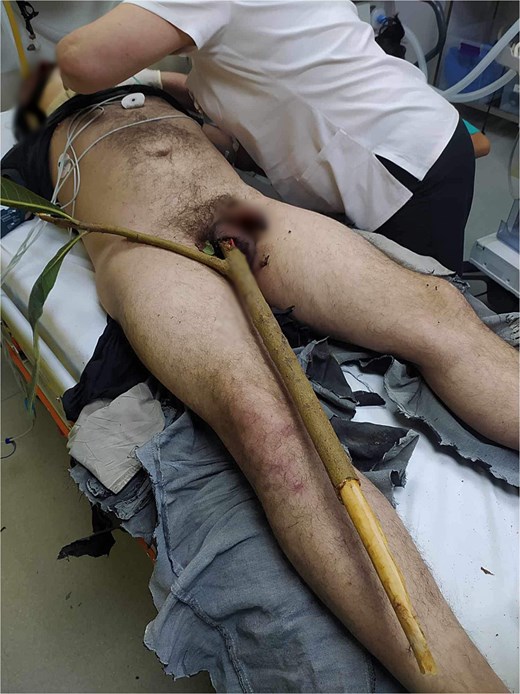
Initial presentation demonstrating the wooden foreign body at the right hemiscrotal entry site (image anonymized).
Imaging findings
Computed tomography (CT) scan demonstrated hemoperitoneum, two full-thickness small bowel perforations, multiple mesenteric lacerations, diaphragmatic rupture, left hemopneumothorax, pulmonary contusion, subcutaneous emphysema, and bilateral rib fractures (Fig. 2). The foreign body was visualized extending from the scrotal entry site through the abdominal cavity into the left pleural space. Splenic parenchyma showed a poorly demarcated hypodense area with hyperdense lacunar inclusions, requiring follow-up (Fig. 3).
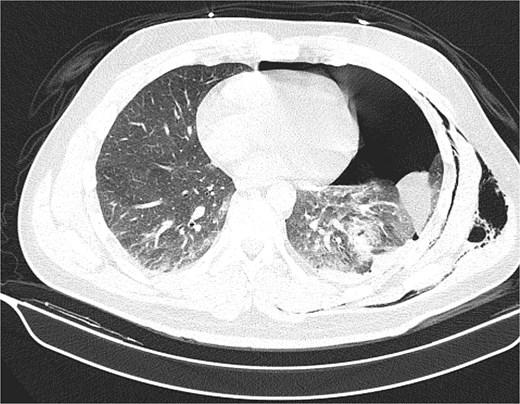
Contrast-enhanced axial chest CT demonstrating left-sided hemopneumothorax with associated pulmonary contusion and subcutaneous emphysema.
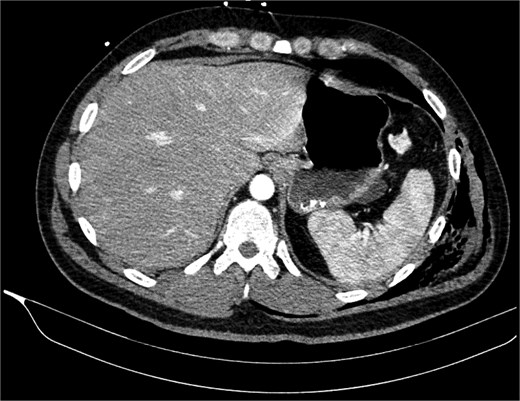
Contrast-enhanced axial CT scan of the abdomen showing hemoperitoneum and associated visceral injury along the suspected trajectory of the penetrating foreign body.
Operative findings and procedures
Abdominal phase: Midline laparotomy revealed ~350–400 ml of hemoperitoneum, two small bowel perforations at separate sites, multiple mesenteric lacerations, and diaphragmatic rupture. Wooden foreign body fragments were removed from the abdominal cavity (Fig. 4). Segmental small bowel resections with side-to-side anastomoses were performed, mesenteric bleeding was controlled, and the diaphragmatic defect was repaired [1–3].
Thoracic phase: Thoracoscopic exploration demonstrated ~1 l of hemothorax, pleural injury, active bleeding from intercostal vessels, and a pulmonary parenchymal laceration involving the left lower lobe. Evacuation of hemothorax was performed, and bleeding intercostal arteries were identified and ligated. A wooden foreign body fragment was removed (Supplementary Video S1) from the pulmonary parenchyma, with associated bleeding noted from the lung wound (Fig. 5).
The lung laceration was repaired intracorporeally using 3–0 PDS sutures. Multiple small wooden fragments were subsequently removed from the thoracic cavity, and additional fragments had been retrieved from the abdominal cavity. Complete pneumostasis was achieved. The pleural cavity was irrigated, a 24-Fr chest drain was placed adjacent to the injured area, and the wound was closed in layers with Michell’s clips applied to the skin.
Second thoracoscopic intervention: On postoperative day, repeat thoracoscopy with pleural decortication and drainage was performed due to localized pleuritis and empyema [6, 7].
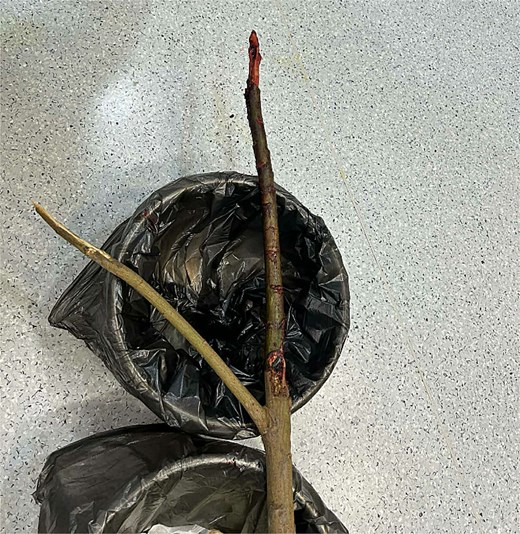
Wooden foreign body fragments removed from the abdominal cavity during laparotomy.
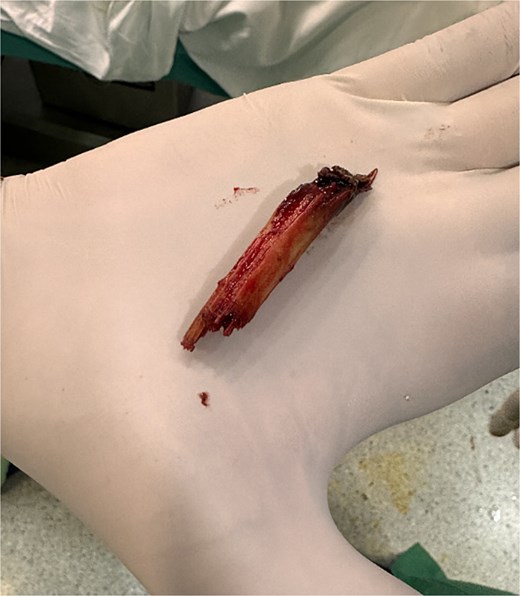
Wooden foreign body fragment removed from the pulmonary parenchyma during thoracoscopic intervention.
Postoperative course
The patient initially recovered under supportive management, including antibiotic therapy, anticoagulation, nutritional support, and analgesia. Chest and abdominal drains were removed on postoperative days 5–6. On postoperative days 10–11, the patient developed fever and leukocytosis, prompting repeat thoracoscopy.
Primary healing of the abdominal wound was achieved, while the scrotal entry wound and suprapubic counter-incision required local wound care. Following surgical and therapeutic management and resolution of postoperative pleural complication, the patient demonstrated stable recovery from thoracoabdominal injuries. Follow-up and imaging confirmed satisfactory lung re-expansion and stable postoperative findings, with no ongoing bleeding or infectious complications. The overall surgical outcome was favorable, and no further interventions were required.
Psychiatric background
The patient had a known history of paranoid schizophrenia (ICD-10: F20.0), previously treated with risperidone, trihexyphenidyl (cyclodol), and zopiclone. During hospitalization, a psychotic exacerbation characterized by delusions and agitation was observed, necessitating adjustment of psychiatric management, including haloperidol, carbamazepine, clozapine (azaleptin), and depot flupentixol (clopixol).
Serial psychiatric assessments were performed throughout the hospital stay. Under pharmacological treatment, the patient’s mental state improved, with reduced agitation, improved cooperation, and adequate orientation. At transfer, the patient had sufficient capacity for clinical decision-making. Following multidisciplinary evaluation, the patient was deemed surgically stable; however, ongoing psychotic symptoms warranted transfer to an inpatient psychiatric facility [8].
Discussion
This case demonstrates severe penetrating abdominothoracic trauma caused by accidental impalement [1, 2, 9]. Injury entering through the hemiscrotum and extending transabdominally and transdiaphragmatically into the pleural cavity and lung is extremely rare [6]. The foreign body traversed multiple compartments, causing injuries to the bowel, mesentery, diaphragm, lung parenchyma, and intercostal vessels, requiring staged surgical management [3, 4, 10]
The abdominal phase treated hemoperitoneum, bowel perforations, and mesenteric injuries with resection and anastomosis, with diaphragmatic repair restoring the thoracoabdominal barrier. The thoracic phase included hemothorax evacuation, intercostal artery ligation, fragment removal, and pulmonary repair [1, 2]. Organic material increased infection risk, leading to pleural empyema requiring thoracoscopy and decortication [6, 7].
Timing of surgery is a key prognostic factor [3,9]; early laparotomy and thoracoscopy were critical, as delays increase morbidity and mortality [2]. The staged approach reflects dynamic trauma care.
Paranoid schizophrenia contributed to the mechanism of injury, as the patient reported jumping to “test gravity” and “defeat death.” Psychotic exacerbation complicated care with agitation, delusions, and impaired judgment. Pharmacological treatment achieved partial stabilization and restored capacity for consent, requiring psychiatric involvement and transfer [8].
Although psychiatric illness influenced the course, the primary challenge was surgical management of extensive abdominothoracic trauma. This case highlights the intersection of trauma and psychiatric illness, emphasizing that timely surgical intervention was decisive for survival, while psychiatric management ensured stability [8]. Multidisciplinary care [3, 4] and close collaboration are essential, as complications and psychiatric instability may prolong recovery.
Conclusion
Penetrating wooden foreign body injuries carry high risk of extensive thoracoabdominal involvement. Early recognition, prompt surgical management, and multidisciplinary care are critical. Psychiatric comorbidity influenced the mechanism but outcome depended on surgical management. Vigilant monitoring for delayed complications, including pleural infection and retained organic material, is essential.
Author contributions
All authors contributed equally to this work.
Conflicts of interest
The authors declare no conflicts of interest.
Funding
None declared.
Disclosure
This case has not been previously published and is not under consideration elsewhere.
Consent
Written informed consent was obtained from the patient for publication of this case report. Accompanying images have been censored to ensure that the patient cannot be identified. A copy of the consent is available on record. The patient was deemed adequate to provide consent at the time, as confirmed by the healthcare provider. In addition, the patient’s father provided consent as a witness during the process.


