


Abstract
IgG4-related disease (IgG4-RD) is a multi-system disorder that rarely presents with gastric manifestations. A 26 year old woman presented with post-prandial symptoms of dyspepsia, dysphagia and reflux with a proximal submucosal gastric mass on imaging and endoscopy. She underwent a number of endoscopic and laparoscopic biopsies, which were inconclusive. Suspecting IgG4-RD, steroids were trialled empirically, but did not result in radiological or symptom improvement. Ultimately, she underwent a total gastrectomy, D2 lymphadenectomy and Roux-en-Y oesophago-jejunostomy. On final histopathological analysis of this resection, the diagnosis of gastric IgG4-RD was favoured. Most reports of resection for IgG4-RD in the stomach suggest that it can be treated medically if the level of clinical suspicion is sufficiently high. However, in this case despite clinical suspicion, the initial biopsies were non-diagnostic and empirical steroids failed, demonstrating that these approaches do not always allow avoidance of major surgery for diagnosis and treatment.
Introduction
IgG4-related disease (Ig4-RD) is an idiopathic multi-system fibro-inflammatory disorder. Typical gastrointestinal presentations include pancreatitis, cholangitis, and retroperitoneal fibrosis but Ig4-RD can affect any part of the gastrointestinal tract [1, 2]. Gastric manifestations of IgG4-RD include submucosal tumours, ulcers and polyps, but diagnosis can be difficult as patients may be asymptomatic or present with symptoms which mimic malignancy including dysphagia, weight loss, anaemia, and anorexia [3]. Although diagnostic criteria span clinical, radiological, serological and histological domains, single organ presentations with concerning symptomatology and inconclusive investigations can create a diagnostic conundrum [2]. We present an unusual case of IgG4-related disease presenting as a proximal gastric mass to highlight the challenges associated with the diagnosis of this condition and how assumptions about surgery avoidance with medical therapy may not be correct.
Case presentation
A 26 year old woman presented with a 2-year history of post-prandial symptoms including dyspepsia, dysphagia and reflux. She underwent initial investigations which revealed a partially obstructing submucosal mass of the gastric cardia, just below the gastro-oesophageal junction (GOJ). Imaging confirmed the mass, which was intensely fluorodeoxyglucose (FDG)-avid on positron emission tomography (PET) (Fig. 1a and b). Initially, she underwent a gastroscopy and endoscopic ultrasound (EUS) which revealed a 37 × 27 mm size round intramural (subepithelial) lesion with well-defined borders (Figs 2 and 3). Two passes of fine needle aspiration biopsy were completed with visible core tissues obtained. Histology was inconclusive showing an atypical lymphoid proliferation with no evidence of malignancy seen. Another EUS and fine needle biopsy performed 2 weeks following was also inconclusive. Given these two inconclusive results, it was decided to proceed with diagnostic laparoscopy to obtain a transmural biopsy of the GOJ and gastric lymph node biopsy with specimens sent for histopathology and flow cytometry. The histopathology from these samples showed chronic inflammation, fibrosis and reactive lymph nodes without specific diagnostic features.
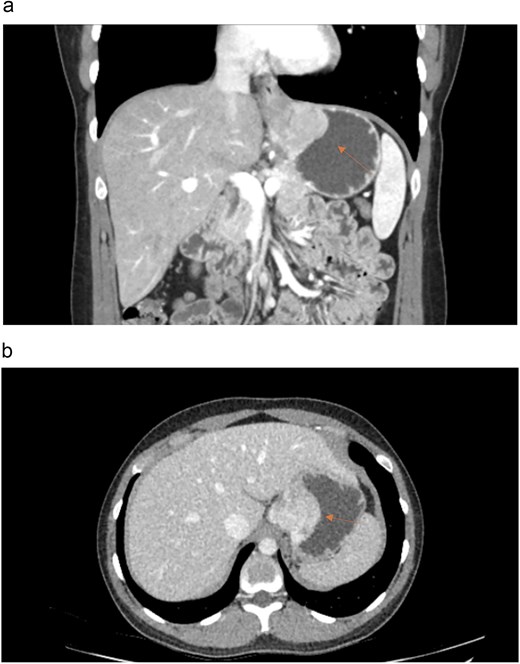
(a) Computed tomography (CT) scan demonstrating gastric mass; coronal view. (b) CT scan demonstrating gastric mass; axial view.
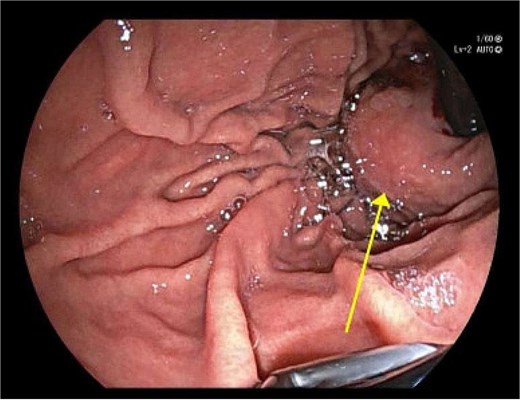
Image of GOJ mass on gastroscopy.
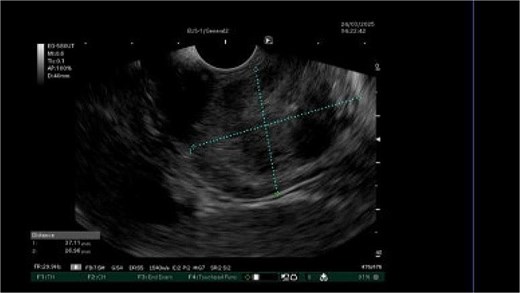
Image of GOJ mass on EUS.
Multi-disciplinary team (MDT) discussions recommended a trial of steroids, and she was prescribed 40 mg of prednisolone daily for 2 months which was then weaned over a month. This was unsuccessful and the patient had ongoing symptoms with a persistent mass. She underwent a repeat EUS at this point with increase in the size of the lesion to 50 × 30 mm and histopathology again demonstrating a fibroinflammatory process with an atypical lymphoid infiltrate with no evidence of a lymphoproliferative disorder on flow cytometry. Ultimately following discussions amongst the MDT and with the patient, it was decided to proceed with surgical management involving an open total gastrectomy, D2 lymphadenectomy and Roux-en-Y oesophago-jejunostomy with insertion of a feeding jejunostomy. Open surgery was undertaken on account of the extensive pre-existing inflammation resulting from the inflammatory mass as well as the previous laparoscopic surgery and EUS biopsies. The specimen was sent for histopathology which revealed a fibroinflammatory lesion as seen on previous biopsies with increased numbers of IgG4 positive cells (>50 per high powered field) and storiform fibrosis favouring the diagnosis of a IgG4-related tumour (Figs 4–6). The patient recovered without major complications and was discharged from hospital on post-operative day 13. At 3 month follow up, the patient had the feeding jejunostomy tube removed and has returned to full time work.
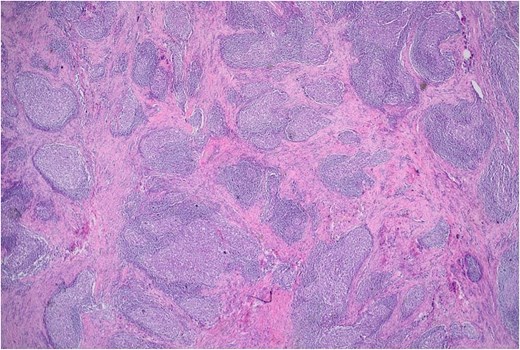
Histopathological image (×2 power) showing prominent lymphoid aggregates set amongst fibrosis seen within the gastric wall.
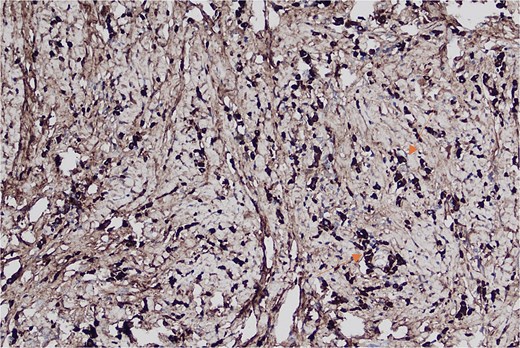
Histopathological image (×20 power) showing the staining of IgG plasma cells. The cells are those stained dark brown against the lighter brown background staining.
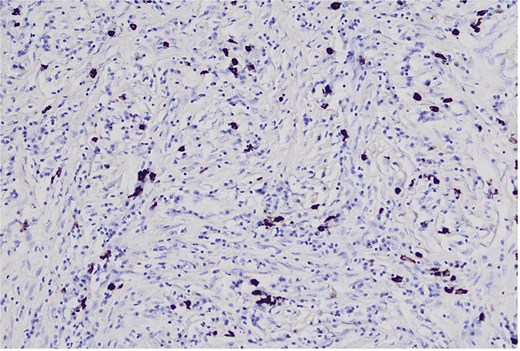
Histopathological image (×20 power) showing the staining of the IgG4 subset of plasma cells. The cells are those stained dark brown against the lighter blue background staining. The IgG4 plasma cells comprised approximately 25% of the IgG plasma cells identified by the IgG stain.
Discussion
This case highlights the challenges associated with the recognition of IgG4-RD. From its first description in 2001, the diagnostic criteria for IgG4-RD have evolved from a general three-pronged criteria to encompass organ-specific criteria for IgG4-related pancreatic, renal, lacrimal, ophthalmic, and respiratory disease [2, 4]. Unfortunately, no such organ-specific criteria exist for IgG4-related gastric disease. The 2020 Revised comprehensive diagnostic criteria includes [4]:
Clinical and radiological features of diffuse or localized swelling, mass, or nodule.
Serological diagnosis with serum IgG4 levels >135 mg/dl.
Histopathological diagnosis of lymphocyte and plasma cell infiltration, consideration of IgG4 positive plasma cell to total IgG positive cell ratio, storiform fibrosis, or obliterative phlebitis.
Meeting all three criteria supports a definite diagnosis under these guidelines [4]. In this case, the patient had single organ involvement with a mass, but initial biopsy results were inconclusive. These biopsies of the gastrointestinal tract frequently have limited diagnostic utility as the typical findings of storiform fibrosis and obliterative fibrosis are often absent secondary to superficial mucosal sampling [5]. It was only after histopathological assessment of the surgical specimen that revealed lymphoid follicles, IgG4-positive plasma cells representing >25% of IgG-positive cells present and storiform fibrosis, that two criteria consistent with probable diagnosis of IgG4-RD were met.
IgG4-RD can be managed with medical therapies. This can include glucocorticoids, disease-modifying anti-rheumatic drugs (DMARDs) such as azathioprine, mycophenolate and methotrexate, and newer biologic agents [6]. Steroids are integral to IgG4-RD management but combination with DMARDs has a higher remission and lower rate of relapse compared to either alone [7]. The utility of biologics including rituximab is a novel area with high rates of disease response (>90%) observed and ongoing trials into other agents like abatacept and dupilumab [6, 8, 9]. Medical management can only be undertaken when IgG4-RD is recognized. There are several cases in the literature in which patients have undergone gastric wedge resection, subtotal gastrectomy and total gastrectomy for a gastric mass that is only recognized to be IgG4-RD following histopathological examination of the surgical specimen [3, 10, 11]. This is likely because other neoplasms such as gastrointestinal stromal tumours and malignancy cannot be excluded. In each case, authors reiterate that consideration of IgG4-RD in the differential diagnosis and trial of steroids may avoid unnecessary surgery. Our case highlights the complexity of decision making in a patient where steroid trial was pursued and unsuccessful. Failure of this initial management combined with ongoing symptoms, inconclusive biopsy results and a persistent mass lesion in the gastric cardia, necessitated total gastrectomy. Patient-centric multi-disciplinary team care for this patient was central to decision making in this case and guided progression from imaging to biopsy technique to a trial of medical management and finally to surgical resection.
Conclusion
IgG4-related disease has a wide array of presentations due to its ability to affect multiple organ systems. Isolated gastric disease is rare. Despite a high index of suspicion, repeated attempts to obtain a non-surgical histological diagnosis and a trial of steroid therapy, operative management was required to make the diagnosis.
Conflicts of interest
None declared.
Funding
None declared.


