


Abstract
Strangulated inguinal hernia is a common surgical emergency; however, associated testicular gangrene with concomitant bowel ischemia in adults is exceptionally rare. We report the case of a 69-year-old male who presented with systemic instability and an incarcerated right inguinal hernia. Clinical deterioration necessitated urgent exploratory laparotomy, which revealed a strangulated segment of small bowel extending into the inguinal canal. Bowel resection with primary anastomosis was performed. Further exploration demonstrated complete gangrene of the spermatic cord and testis, requiring right orchiectomy. The patient developed postoperative pulmonary embolism and partial small bowel obstruction, which were managed successfully with multidisciplinary care. He was discharged in stable condition. This case highlights the importance of early recognition and prompt surgical intervention in complicated inguinal hernias to prevent catastrophic vascular compromise of bowel and testicular structures.
Introduction
Inguinal hernias are the most common abdominal hernias, and their repair is among the most frequently performed surgical procedures worldwide. Although complications like spermatic cord or testicular injury are rare and usually iatrogenic, testicular gangrene directly resulting from an inguinal hernia is exceptionally uncommon in adults [1, 2]. This case highlights a rare presentation of testicular gangrene secondary to strangulated inguinal hernia in an adult, emphasizing the challenges of managing severe systemic instability and the need for timely surgical intervention.
Case report
A 69-year-old Indian male presented to the Emergency Department with recurrent episodes of dark green-brown vomiting. History taking was limited due to language barriers and systemic instability.
On examination, the patient was conscious but critically unwell, with tachypnea, marked tachycardia (140–190 bpm), and hypotension (BP 80/55 mmHg). Oxygen saturation was 97% on room air, and he was afebrile. Abdominal examination revealed a distended, tympanic abdomen with a right-sided incarcerated inguinal hernia that was severely tender, without signs of peritonitis. Bowel sounds were sluggish, and digital rectal examination revealed an empty rectum. Laboratory investigations demonstrated lactic acidosis, leukocytosis (white blood cells 19.7 × 10⁹/L), acute kidney injury (creatinine 579 μmol/L), hyponatremia (Na 122 mmol/L), and INR 1.45.
Despite initial resuscitation, the patient deteriorated with worsening tachycardia (180 bpm) and severe hypotension (BP 39/25 mmHg). Atrial fibrillation was confirmed on electrocardiogram and managed with emergency cardioversion. After stabilization with inotropic support, the patient was transferred urgently to the operating room after surgical committee approval.
Exploratory midline laparotomy revealed a strangulated segment of small bowel extending into the right inguinal canal (Fig. 1). Attempts at reduction resulted in iatrogenic mesenteric injury. A secondary right inguinal incision demonstrated an indirect inguinal hernia containing ~15 cm of gangrenous small bowel, located 50 cm proximal to the ileocecal valve (Fig. 2).
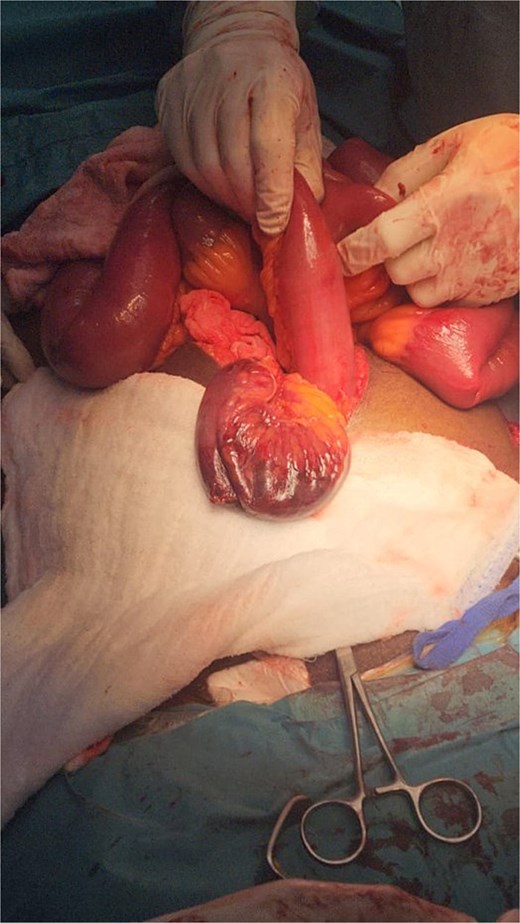
Gangrenous small bowel segment intraoperatively.
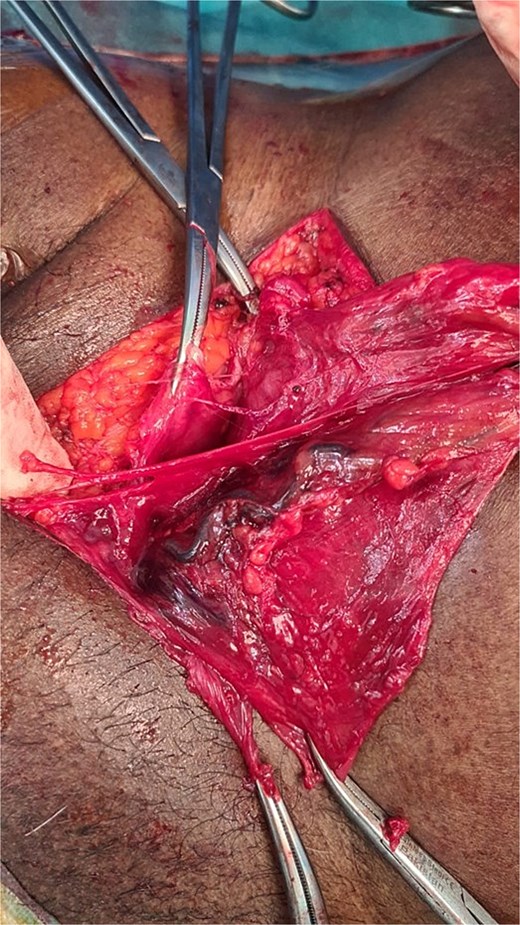
Hernia sac with ischemic changes.
The non-viable bowel was resected using an EndoGIA stapler, followed by primary anastomosis with GIA and TIA staplers. The spermatic cord was gangrenous. Intraoperative urology consultation confirmed complete testicular gangrene, and a right orchiectomy was performed (Fig. 3). The inguinal defect was subsequently repaired.
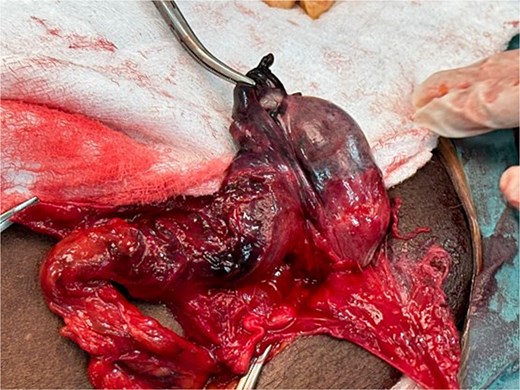
Gangrenous testis and spermatic cord.
Postoperatively, the patient was managed in the Intensive Care Unit, where therapeutic heparin infusion was initiated following cardiology consultation. On postoperative day four, he developed abdominal pain, altered mental status, and hypoxia. Computed tomography revealed pulmonary embolism and partial small bowel obstruction near the anastomosis site, without evidence of leak or intra-abdominal collection. The obstruction was managed conservatively, and anticoagulation was continued.
The patient improved gradually and was discharged in stable condition on postoperative day fifteen, with advice for follow-up in his home country.
Discussion
Clean surgical procedures may result in complications such as bleeding, infection, seroma, ileus, and urinary retention; hernia repair may also lead to recurrence, chronic groin pain, or injury to the spermatic cord or testis [1, 2].
Testicular gangrene as a complication of inguinal hernia alone is exceedingly rare in adults. Our literature review identified only one similar case, in which groin exploration revealed brownish fluid within the hernia sac, a gangrenous ileal segment, and testicular gangrene, necessitating midline laparotomy with bowel resection, primary anastomosis, hernia repair, and orchiectomy, followed by an uneventful recovery [3].
Two additional cases were identified. In the first case, a 30-year-old man presented with gangrenous vanished testis, perforated terminal ileum and necrotizing fasciitis of the right groin due to delayed presentation, there, an abdominal approach was used to resect the affected bowel, ileostomy formation then radical debridement followed. This was followed by ileostomy revision 6 weeks later [4]. In the second case, a 10 cm of the herniated sigmoid colon was found to be ischemic and non-viable. The affected segment was transected, and an end colostomy was created. This case also involved ischemia of the spermatic cord and necrosis of the right testicle and hernia sac, necessitating a right orchiectomy [5].
Inguinal hernia with testicular vascular compromise has also been reported [6, 7]. Some cases were managed by hernia reduction, which restored reperfusion to the bowel and testis without the need for surgical resection [8, 9].
Isolated orchiectomy due to hernia-related testicular vascular compromise has been reported, even when bowel viability was preserved [10]. A similar case was reported in a pediatric patient of a 17-day old boy who was found to have a gangrenous testis but a healthy bowel, the infant was taken for an emergency surgery where the herniated bowel was explored using an inguinal approach, the healthy bowel was reduced through the defect then orchiectomy and herniotomy were performed [11].
In conclusion, prompt repair of inguinal hernia is essential to prevent catastrophic complications, particularly in young male patients, consistent with evidence from pediatric populations [12]. Furthermore, clinicians should maintain a high level of suspicion for testicular infarction and should not hesitate to perform an ultrasound to rule it out.
Acknowledgements
The authors acknowledge the multidisciplinary teams and nursing staff involved in this patient’s care.
Conflicts of interest
The authors declare no conflicts of interest.
Funding
None declared.
Data availability
All relevant data are included within the manuscript.
Patient consent
Written informed consent was obtained from the patient for publication of this case report and accompanying images.


